Vibecoded OpenClaw and failed...
Three weeks deep into building an OpenClaw-style assistant. A week-one teardown of why pure vibe-coding doesn't scale — and what 'agentic engineering' actually means.
Epically! But I haven’t given up yet.
Tl;dr:
- Vibecoding won’t get you far. You’ll have to be an ‘agentic engineer’ if you want to build anything meaningful. (I’ll expand on this in a bit)
- RTFM — not new, but has never been more important. The most common thing I’ve seen as a reply from Peter Steinberger has been “Please read the documentation…”
- LLMs are more intelligent than you, but I haven’t seen a worse case of ADHD than with an agent. Especially over long sessions.
- Also, they have 0 vision. The magic of OpenClaw is actually its persistent long-term memory — leading to the ability to have some kind of vision. But that doesn’t exist when you’re trying to build OpenClaw. Catch 22!
Introduction
This series is going to chronicle my attempts at trying to build an OpenClaw (fka Clawdbot) style personal assistant.
This is still a WIP and I’m 3 weeks into this project with 2 major milestones to report and hopefully my 3rd by this weekend. I don’t know if I’ll succeed, but my hope is that each week I’ll have enough learnings to put out something of value to anyone who wants to build.
In this (first) article I’ll discuss my first week. And unlike most other pieces on vibe coding, vibe building or ‘agentic engineering’ as Peter Steinberger calls it (I loled at him when I first heard it, but I’m now a believer), I’m going to talk about how not to approach a project like this.
With that set, let’s jump in.
Context
Like most of us on X, I first tried ClawdBot in late Dec / early Jan and was blown away. This was before the whole name fiasco where Anthropic molted to MisAnthropic resulting in some hilarity.
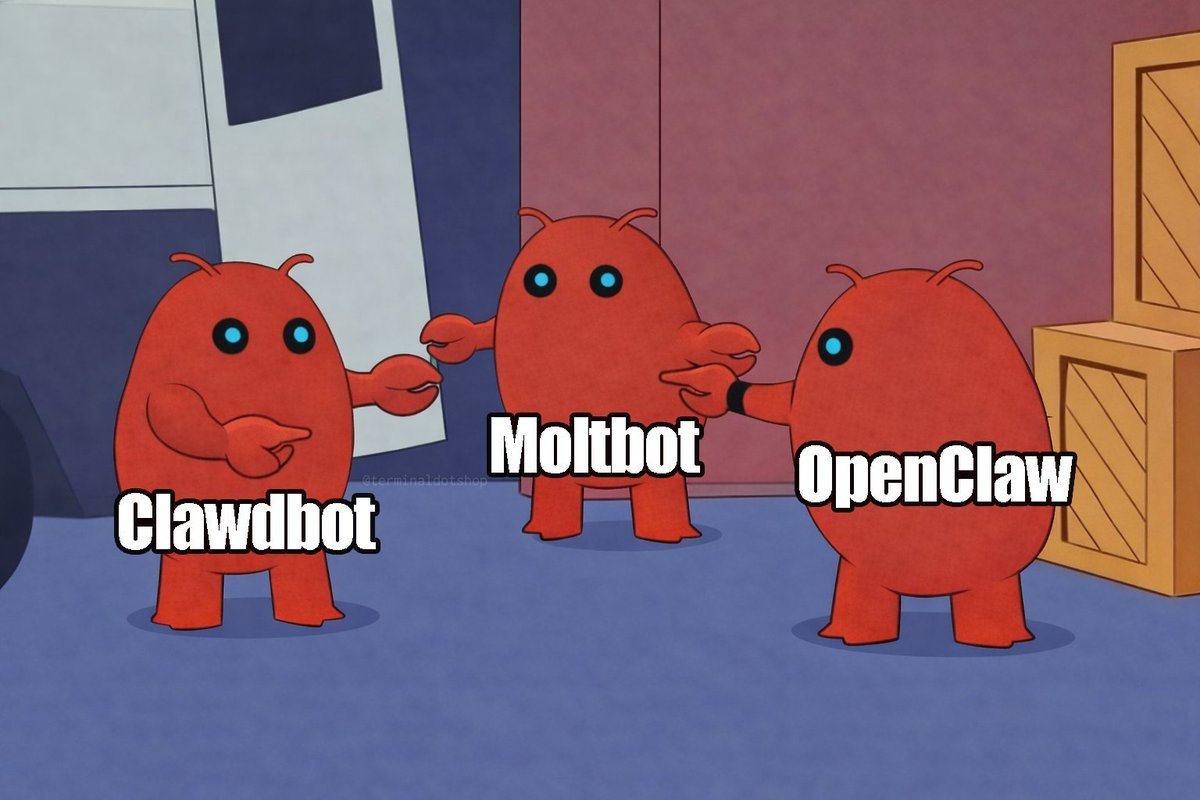
Despite, what I gathered were, some concerns regarding security, we all know openclaw has changed oss tech.
The Inspiration
My mom is a non-techie who follows me on X. She likes all my posts. She keeps asking me about AI and I figured that there should be a secure bot that caters to senior citizens. Who knows what that might lead to.
The Ambition / Idea
Build a ClawdBot for senior citizens. Simple, safe and secure! And thus was born — Senior Mantis*: A personal assistant for boomers; one that will gently walk them into 2026! I didn’t think this through, as will become evident shortly.
I figured, as a vibe coding expert, how hard could it be?

Spoiler: Very!
The Plan of Action
- Fork the OpenClaw repo
- Open up Codex
- Tell it to make Senior Mantis (I’m vibe-coding after all)
- ??
- Profit
I never got past step 3.
First let me start by giving you a glimpse of things I did and what went wrong:
- Tried to change the name across everything to SeniorMantis (I had every intention of giving credit wherever required, but this was eventually going to be something different, right!) — this is harder than it looks because of the sheer size of the repo and how many things OpenClaw actually does. (Peter is a madlad!)
- Workspace migration & docs sync — Codex has the idea down: get the docs right. But there was so much to ingest and update that over time, I confused the heck out of it. Workspace migration worked on the surface, but replacing every instance of ‘OpenClaw’ with ‘SeniorMantis’ didn’t pan out as expected.
- The docs migration actually took up a lot of time because Codex spent most of its context reading and updating docs and the constant session compaction didn’t help with making repo-transition easier.
- I wanted to kill all channels and keep only WhatsApp — this is the primary channel oldies in India use. This is also harder than it looks — see above.
- Revisit the onboarding to make it simpler and less fidgety. Figured I’d make an electron app that I could eventually build for various platforms. It never panned out the way I’d have liked. Kept iterating on things that it should have one-shotted. (See point 3)
- Improved local CLI resolution behavior for desktop testing — except I had no idea what this resulted in.
- Fixed startup-cycle fragility since I now had an electron app that kept crashing during testing — harder than it looks when you don’t even know what’s breaking and where… (Recurring pattern as you can see)
- Halfway through this whole thing, I decided to screw the boomers and just make an agent I can use. So we moved from calling it SeniorMantis to HolyOps* — because this is now a calling!
- Renaming everything again…
I basically ended up in a loop with a lot of broken pieces that I kept debugging and would patch and fix but not be happy with the runtime. And a week later I was still very much in the shadow of OpenClaw and nowhere near my goal.
The reason things were a mess was because I was truly vibe-coding.

“Yo codex, build me openclaw, except call it senior mantis. Make no mistakes.”
And for the first time I realised that I had never vibe-coded before. All my previous projects, big or small, were thought through. Each was built piece by piece, over time. And while I may not have written more than 1-2% of the code, I knew the codebase inside out. I am not a programmer by trade; I say this to highlight that I’m not entirely familiar with TypeScript (or most languages), but I do understand basic logic and depended completely on the LLM to translate the programming language into English for me. And all my other projects work, no better (or worse) than many other apps / software that I’ve used.
With this forked repo, aside from reading through the docs, I hadn’t bothered to poke around with anything else. This may not be important a year from now. But in March of 2026, it still matters once you get past a certain codebase size. You need to act as this mortal guide for this vastly more superior intelligence.
The Lessons
Hence lesson 1: If you’re only going to vibe-code stuff, you’re ngmi. You’re going to have to become an ‘agentic engineer’. You don’t need to have a computer science background or have familiarity with programming before this, but you will eventually become a programmer and if you’re not ok with that — give up now and try again in a year or two.
Leading to lesson 2: RTFM — every programmer started out like you. Not knowing shit. Years of producing code that won’t run and then having to read docs is what got them to where they are. Us ‘vibers’ have been given a gift. We may not need to learn the language, but you’re still going to have to read the docs so you know your earhole from your arsehole. Which means you’re going to have to understand programming concepts. Which means, you will, whether you like it or not, become an ‘agentic engineer’. Everything else flows from this idea of working towards becoming a programmer.
Lesson 3: Have a vision. I had no vision and hence Codex had no focus. We were never able to build anything because we were trying to build everything. Everything was just a pie-in-the-sky 36k ft overview of what it should do.
This resulted in context bloat. Combined with vision drift, it became the primary reason that I chased my tail for a week. One fix would break something else. Or I wouldn’t like something and instead of giving specific feedback, I’d just tell Codex to figure it out. It tried, very hard too. I never bothered to look at the code, the files or even ask what logic was being implemented. And without proper guidance it was stuck.
At the end of 6 days and ~107 commits — I had no idea what was happening in my repo and decided to call it quits. I wanted to start afresh and build from scratch.
The Redemption
But before I did, I spent many hours with Codex inside the OpenClaw repo asking questions and understanding how Peter had built this magical machine. I also picked up some nice tools and ideas along the way: scripts and prompts to include in my workflow — git workflow, committer script, AGENT.md prompts, concepts on how OpenClaw was built — the foundation of agentic workflows, etc…
And armed with this knowledge, I jumpstarted my new butler: Alfred! (Spoiler, this didn’t go well either…) More on Alfred in the next one.
Here’s my senior-mantis repo: github.com/Bingeljell/senior-mantis for anyone who is interested. I didn’t even get to changing the readme… I pushed the final commits from local to the repo just now so everyone could see this glorious pile of poop I had made.
Don’t ask me anything about the repo, I haven’t the faintest clue.
gg.
PS: Not a single word in this article is written by AI. I only do that with code-gen.