Lowering the floor and raising the ceiling
AI hasn't replaced creativity — it's expanded who gets to participate, and how far the best can push.
The ChatGPT moment will be remembered as the point when AI transformed the creative industry. It was our first real glimpse of a world where machines could enhance human imagination and not just productivity. The early years are always messy. Critics, skeptics, pessimists and doomers have thus far dismissed it as a fad, predicting a bubble that would burst. In April of ‘25, it looks like they’re wrong. Like the microprocessor, the internet, or the mobile phone, AI followed a familiar path: a rocky start, followed by rapid adoption. But unlike those technologies, the graph plotting AI’s rise has been the best version of a hockey stick thus far. Its impact, startling!
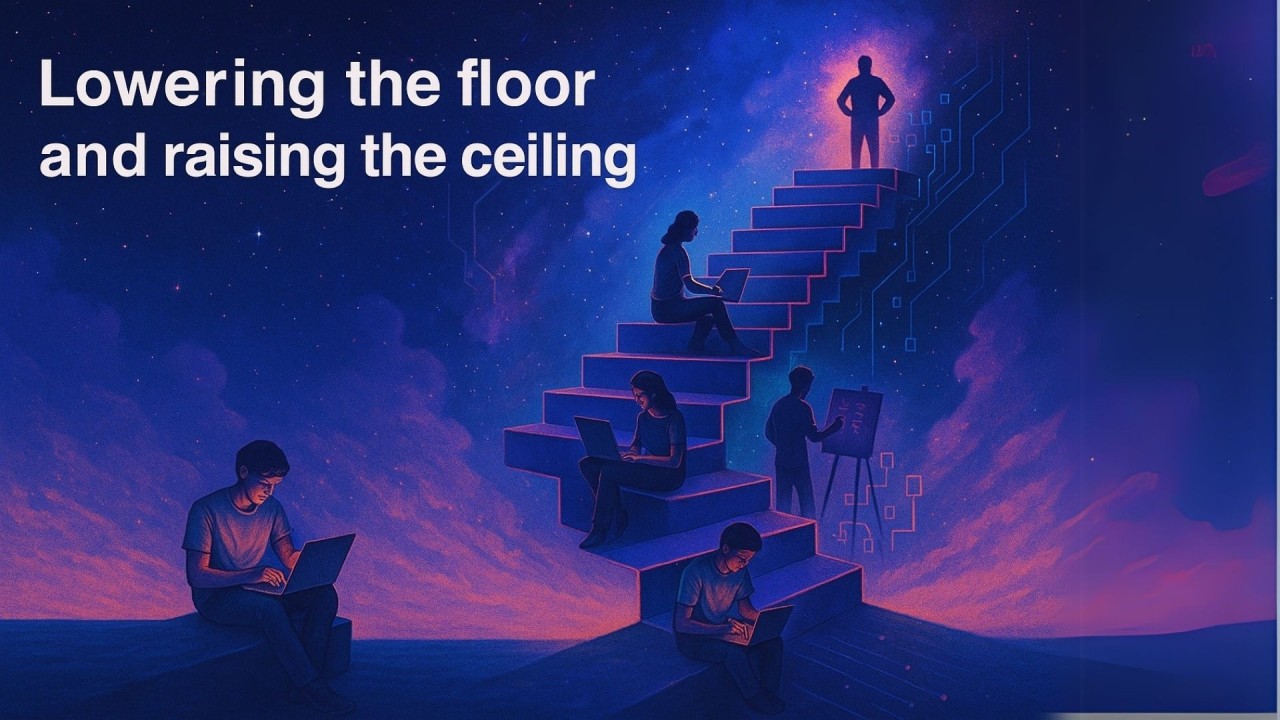
Much like the printing press democratised knowledge, AI is now democratising creation. Anyone with even a flicker of creativity can bring their ideas to life. I wrote about this in another post about the future of content in an AI world. In just a few years, AI has evolved across formats, whether it’s text, images, video, music, code, making it easier than ever to turn imagination into reality. As someone running an ad agency I’ve seen this unfold firsthand, and it’s clear: AI has lowered the floor for creativity in ways we’ve never seen.
Take “vibe coding,” where newbie devs build apps without writing a single line of code. They text-prompt their way to success. Who would have thought a developer could build a browser playable 3D flying game on track for $1m in ARR as a side quest. I’ve built out a few apps for personal use myself. These aren’t edge cases either; here’s a list of vibe coded projects that serve as a great reality check. They’re signs of a new creative landscape.
At the same time, AI is raising the ceiling for professionals. Artists like Refik Anadol use AI to create immersive, data-driven installations that evolve in real time, works that traditional tools couldn’t achieve. Musicians experiment with AI to compose symphonies from heartbeats or generate entirely new sounds. Creatives now have a partner that helps them ideate, iterate, and push boundaries. A good copywriter can 10x their output; a designer can visualise infinite possibilities. Even marketing teams rely less on external agencies, thanks to AI’s efficiency. (The future is agentic and I’ve more to say on that in a future post.)
This isn’t without risks. Over reliance on AI could dull our creative instincts, and questions about ownership and originality remain. But these concerns don’t overshadow the bigger picture. AI is a tool, like a paintbrush or a keyboard. It doesn’t replace creativity; it amplifies it. For beginners, it opens doors. For experts, it expands horizons. We’re at the start of something new and at 21N78E, we’ve always been about the ‘Techno-Human’ future.
As far as access to creativity goes, the floor has never been lower, the ceiling never higher. And that’s worth paying attention to.