Death by a thousand cuts: The implosion of the advertising industry
Shrinking margins, bleeding talent, jilted clients — the slow unraveling of an industry, and what might come after.
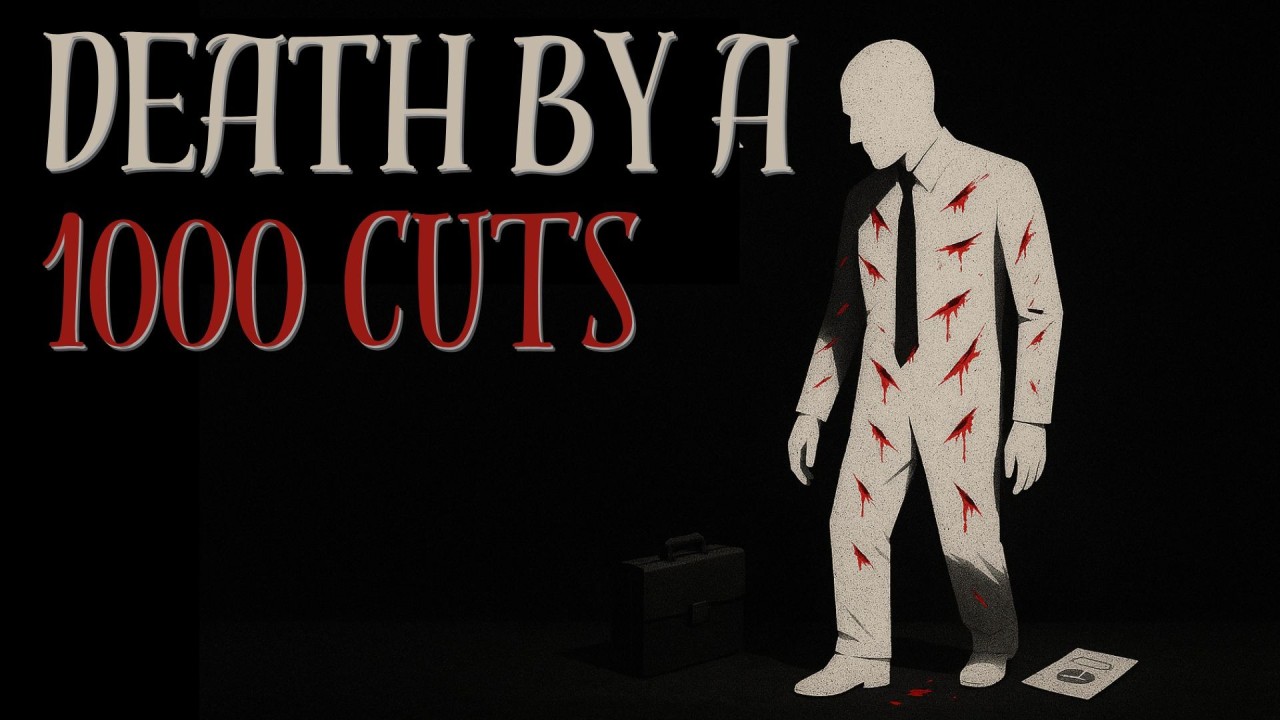
Shrinking margins, bleeding talent, jilted clients, unmeetable expectations, lack of clarity, and an evaporating sense of work-life balance… just a Tuesday morning in ad land.
This isn’t about AI stealing our jobs, not yet. Accenture’s acquisition of Droga5 in 2019, before ChatGPT’s shadow loomed, signalled deeper fissures. The industry was already fracturing: JWT, a century-old titan, morphed into Wunderman Thompson, then VML Y&R, and finally just VML, its legacy erased. Publicis consolidated its empire into Publicis One, eventually rebranding to “Leo”. Omnicom devoured IPG. Creative agencies buckled under the pressure first, but media houses soon followed, leaving no corner of the industry unscathed. (A day before publishing this article, Grey Worldwide was moved under the Ogilvy umbrella).
The numbers* paint a grim picture. Between 2021 and 2024, global advertising spend climbed from $740 billion to $1,018 billion, an almost 40% rise, propelled by digital channels that soared from $568.6 billion to $780 billion. Yet agencies barely registered a pulse. WPP’s revenue crept from $17.66 billion to $18.43 billion, a modest 4.4% growth. Omnicom managed a 9.7% increase to $15.69 billion. Meanwhile, IPG contracted to $10.69 billion, and Dentsu dwindled to $9.20 billion. Only Publicis, buoyed by a third of its revenue from MarTech (a sign of the times), surged 24.9% to $17.35 billion. Over three years, ad spend grew by over 40%, but most agencies continue to limp along with single-digit gains or losses. Even independent agencies, like Wieden+Kennedy, fared slightly better by staying agile, but their growth came at the cost of relentless pressure and razor-thin margins.
Big tech, by contrast, has never been happier. In 2024, Meta and Alphabet alone captured over 50% of global digital ad spend. Hundreds of billions flowing directly to their platforms, bypassing agencies entirely. Notably, a significant chunk of start-up capital ended up in their hands as well. Their advantage lies in boardroom influence and seamless control over the advertising value chain, from budget optimization to A/B-tested creative execution. So much so that Mark Zuckerberg has now declared war on the entire advertising industry. As expected.
We’ve only got ourselves to blame. We lost our way. We forgot the golden rule: It’s cash, not kudos, that runs businesses. The dirt kicked up in the digital revolution created a wonderful dust cover for many to have a wild decade and change the course of advertising for the worse.
Distracted by shiny new tech, we chased trend after trend and replaced what matters with vanity metrics. First it was likes and followers. Then, ‘viral’ ideas. Now it’s influencers and social media trends. All the while, revenue either remained stagnant or shrank. (Ironically, the influencers are likely to outlive us as they pivot to driving business.)
We sacrificed creativity, soul and spine at the altar of egos and whimsical vanity metrics. Big tech used advertising agencies as the guinea pig to validate what works and we ended up high on our own supply of advertising kool-aid.
Now, a reckoning has arrived. Leadership is demanding accountability, and marketing budgets face unprecedented scrutiny. Everyone’s on the chopping block. The survivors will forge a new agency model. Or perhaps revive an old one; blending the pragmatism of 2025’s data-driven world with the genius of insight-driven creativity from the industry’s golden age. Think David Ogilvy, whose Hathaway shirt campaign with a man in an eyepatch sold product, not prestige, or Leo Burnett, who breathed life into the Marlboro Man. Or the Indian trail blazers who coined the Nirma girl and the iconic jingle. Crafting icons that moved merchandise. The new ad shop will be lean, niche, and relentless about results, wielding data to sharpen ideas, not supplant them.
This isn’t just a slow and painful death, it’s a rebirth. The agencies that thrive will marry the art of the 1960s admen with the precision of today’s tech. Those who can’t will vanish, mere footnotes in a revolution they didn’t see coming. Until then, it feels like a death by a thousand cuts!
All numbers are from publicly available sources such as Statista or the annual reports of the various companies mentioned. If you spot an error, please let me know and I’ll update them.