AI: Keys to the creative kingdom
When everyone can create, curation becomes the scarce resource. Notes from inside the flood.
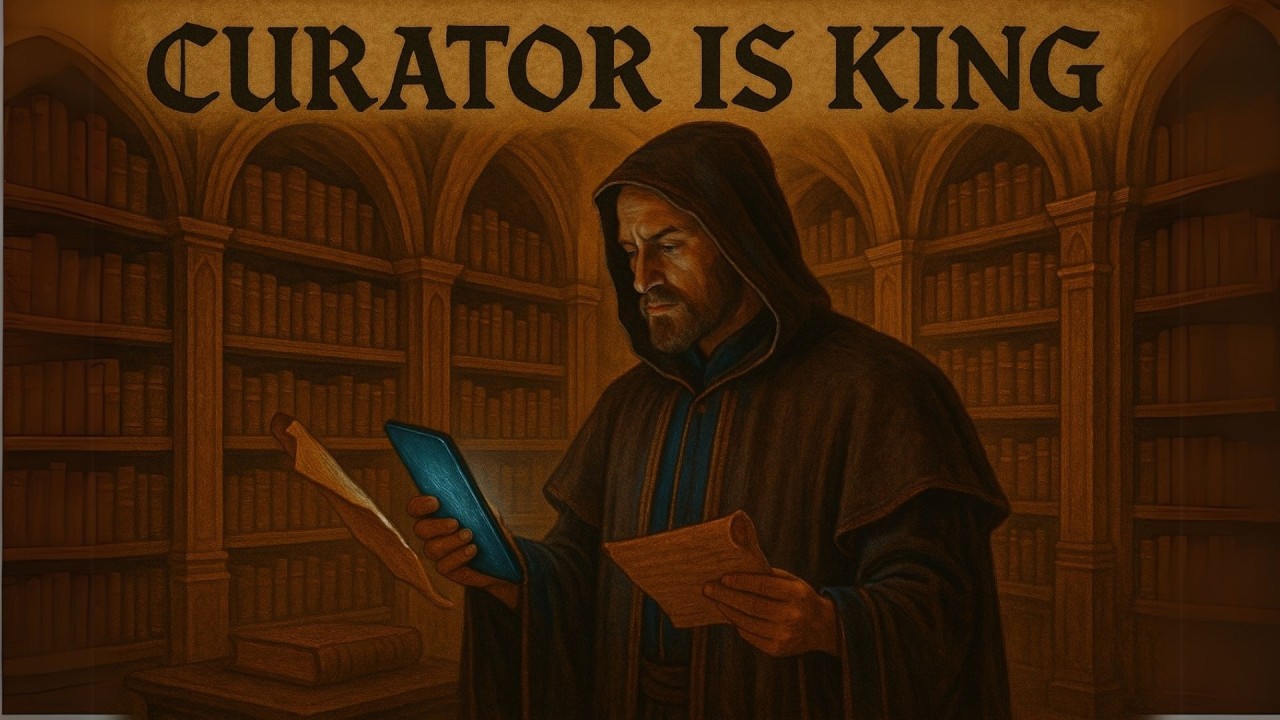
AI is not just another tool; it’s a revolution in human capability. For most of history, creating anything — whether a book, a painting, a song, or a 3D model — required years of practice and a certain kind of talent. Now with AI, anyone with an idea can make it real. It’s as if we’ve handed every person on earth a set of keys to the creative kingdom.
Writers who couldn’t draw a stick figure can now produce illustrated books using any one of the myriad of image generation tools. (I’d recommend Midjourney). Musicians who never learned production can generate tracks with Suno or Udio. Even people with no artistic background can conjure up videos or 3D designs with the likes of Sora, Kling or Meshy. The technical barriers that once kept most people out of these fields are collapsing. Agency will be the only differentiator between those who do and everyone else. This isn’t just progress, it’s a redefinition of what it means to be a creator.
There’s a catch: when everyone can create, the value of creating drops and the volume of content explodes. Instagram was already clocking 95 million posts a day, YouTube 3.6 million videos, TikTok 34 million. Now 10x that. AI doesn’t just amplify existing creators; it unleashes a flood of new ones. The internet, which was already a firehose of information, is about to become a tsunami.
Unfortunately, most of the content is going to be garbage. Not because people lack ideas, but because good creation demands more than tools. It demands taste, discipline, and a sense of what’s worth saying. AI can polish your prose or paint your picture, but it can’t tell you if your story’s worth reading or your image worth seeing. The result? The average quality of content will drop. We’ll drown in mediocrity before we find anything worth saving or sharing.
The good news is that this is where the real story begins. Think back to the early days of the printing press. When books went from rare manuscripts to mass-produced objects, the world got Shakespeare. But it also got stacks of forgettable drivel. The same thing happened with the internet. In the ’90s and early 2000s, before algorithms ruled everything, places like Reddit, Digg, and Fark thrived because they filtered the chaos. Curators — people with taste or communities with collective judgment — became the gatekeepers of attention. They didn’t create the content, they pointed to what mattered.
We’re heading back there. As AI pumps out more content than anyone can process, curation will become the scarce resource. Creators might churn out masterpieces or junk, but it’s the curators, whether human tastemakers or finely tuned algorithms, who’ll decide what breaks through the noise. (For the builders, that’s another focus area — curation algorithms). The future won’t belong to the person who can make the most; it’ll belong to the one who can find the best.
This shift has big implications. For creators, standing out will be brutal. You can’t just rely on AI to crank out a video or a song and call it a day. You’ll need something exceptional, either in quality or in how it reaches the right eyes. For entrepreneurs, it’s a mixed bag. AI lets you build faster and cheaper (prototypes, marketing campaigns, whatever) but the market will be so crowded that differentiation becomes the game. Execution just appreciated in value by a couple of orders of magnitude. That and distribution. And for consumers? It’s a paradox: infinite options, yet a growing dependence on someone else to choose for you.
What about the downsides? Plagiarism will spike. Attention will get even scarcer. But the bigger risk is paralysis. Too much choice, too little signal. We’ve seen this before: the early web was a mess until curators and search engines tamed it. Now, with AI, we’re resetting the clock.
I’m no expert, but here’s a prediction: in a world where anyone can create, the real power will lie in knowing what to pay attention to. Curators, those who can spot the signal amidst the noise, will be the new kings of the internet. And content, their currency. Creators will still matter, but their success will hinge on being found. And the smartest marketers? They’ll stop chasing trends and start tracking curators.
If you’re in this game, whether making content, building a business, or just trying to stay sane, forget the old rules. The future isn’t about who can shout loudest. It’s about who can point to what’s worth hearing.